
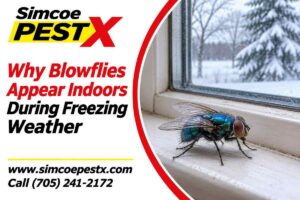
Blowflies can appear indoors during winter because some adults shelter inside buildings, while others may develop from eggs laid earlier on suitable organic material. Heated spaces can provide conditions for fly development even when outdoor temperatures are below freezing. Dead rodents, decaying food waste, or other organic material may be involved, but not every winter […]

About Dabeer
Stored-Grain Insects in Heated Barns During Winter

Stored-grain insects can remain active inside heated barns during Ontario winters because indoor warmth protects them from freezing outdoor temperatures. Grain beetles, weevils, and stored-product moths may survive in grain bins, feed bags, and storage equipment. Some species can also reproduce when conditions are warm enough. Grain temperature, moisture, and existing infestations all influence insect […]
How to Identify Rat vs. Squirrel Tracks in Snow
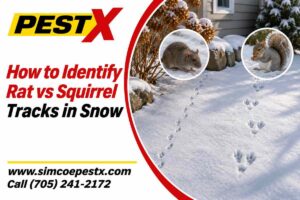
Rat and squirrel tracks in snow can look similar, but their footprints and movement patterns provide useful clues. Rat tracks are generally smaller and may include a thin tail-drag mark. Squirrel tracks commonly appear in groups of four, with larger hind footprints landing ahead of smaller front prints. To tell them apart, examine the footprint […]
Ants Around Heated Greenhouse Benches

Ants may remain active around heated greenhouse benches during winter because the greenhouse provides warmth, shelter, water, and food. In Bradford, Ontario, heated growing areas can support ant activity even when outdoor temperatures fall below freezing. Ants may travel beneath benches, enter plant pots, or follow trails toward insects that produce sweet honeydew. Finding their […]
Why Pest Problems Feel Worse at Night?
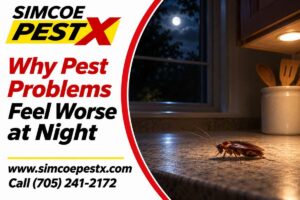
Pest problems often feel worse at night because some pests become more active after dark, while quiet surroundings make their movements easier to notice. Scratching sounds, unexpected insect sightings, and concerns about pests can also make it harder to relax or sleep. However, increased nighttime activity does not always mean an infestation has grown. For […]